October brought a new LEGO MINDSTORMS set to the world. The Robot Inventor 51515 brings some new elements, a new system, and a new color scheme. LEGO was kind enough to send me a set to explore and share. Below is the first video in my series, unboxing the set and my initial thoughts.
This is the first part of a series of videos covering the new kit. From unboxing, to programming, to experimentation and build, check back over the next few weeks as I share this awesome new set!
The set is a lot like Spike Prime. You might want to check out that post to hear my thoughts. If you want to get your hands on the set, you can follow my Amazon affiliate link to get a set. Using the link helps keep this website going and you can use it to search for any purchase as well.
Let’s talk Spike Prime! Have you heard of it? It’s a new robotics kit from LEGO Education. I figured I would share an unboxing of the new sets. I thought we would cover my thoughts and some comparison with the LEGO MINDSTORMS EV3. I’ll being talking about things to consider with the parts, sensors, and electronics and how it might be useful in FIRST LEGO League. This will be a great video for any FIRST LEGO League coaches out there and I encourage you to comment during the steam and after to keep the conversation going!
Video link is above.
Thursday, May 7th, 2020
7:30 PM Eastern Time
Video will be available on YouTube after the stream (probably by Friday morning)
Just a heads up, I’m switching up some website settings, so things might change a bit over the next few days. I am migrating registrars and tweaking some settings. If the site is down, try checking back in a few hours. I hope to have all of this work done this week.
Day 4 was a bit more challenging. There are a lot of details in socket programming. I hope you enjoyed seeing the debugging process, tracking down that sendto() issue for UDP packets!
Day 5 will be about multi-threading. Specifically looking at OpenMP as a quick way to get a multi-threaded application going. This should be a bit easier to develop than the networking code, but much more complex when it comes to debugging.
There is a super helpful OpenMP API cheat sheet located here.
All the code from Day 4 is up on Github. If you have any suggestions on content you’d like me to cover or would like more details, send me a message in the contact page and I will be sure to get back to you!
I’ll be making a new post for each video. Video will be left on YouTube for you to watch later and reference and all code will be pushed to github.
If you are looking for some reference books, both of these are very good, even though they are older.
Day 3 discussed the differences between C and C++. Day 4 will be talking about Networking in C/C++. Specifically we will be looking at WinSock and Socket Programming.
Networking is a big part of any modern application and is quite useful for any aspiring game developers out there. This session will get us sending TCP and UDP packets between two simple applications. It is a great overview of the basics. Bring your questions as this is a very broad field and I look forward to discussing it with you!
All the code from Day 3 is up on Github. If you have any suggestions on content you’d like me to cover or would like more details, send me a message in the contact page and I will be sure to get back to you!
I’ll be making a new post for each video. Video will be left on YouTube for you to watch later and reference and all code will be pushed to github.
If you are looking for some reference books, both of these are very good, even though they are older.
Day 2 is in the books. A slightly smaller (and quieter) crowd. I’ll be watching the video for questions that folks might share. We went over all sorts of pointer use cases.
Day 3 will be digging into the differences between C and C++. This will include a bit of learning about Object Oriented programming. I hinted about some of the differences on Day 2 with regards to memory. It should be interesting.
All the code from Day 2 is up on Github. If you have any suggestions on content you’d like me to cover or would like more details, send me a message in the contact page and I will be sure to get back to you!
I’ll be making a new post for each video. Video will be left on YouTube for you to watch later and reference and all code will be pushed to github.
If you are looking for some reference books, both of these are very good, even though they are older.
Day 1 seemed to go well with 28 folks joining us during the stream, live. The video should be available as soon as it is done processing. Day 1 covered the basics of functions, if/else statements, while loops, and printing.
Day 2 will focus on pointers in C/C++ and the use of header files. We will also discuss arguments to our main function and the use of strings.
All the code from Day 1 is up on Github. If you have any suggestions on content you’d like me to cover or would like more details, send me a message in the contact page and I will be sure to get back to you!
I’ll be making a new post for each video. Video will be left on YouTube for you to watch later and reference and all code will be pushed to github.
If you are looking for some reference books, both of these are very good, even though they are older.
With COVID-19 creating a lot of free time for folks, I thought I would host a few classes on writing software. Since that is a big part of my job as an engineer, I figured this might be a good way to pass my newfound free time. I’ll be using my blog to host the content and I’ll be live streaming the videos starting at 1 pm on April 20th. Each tutorial will last around an hour and it will be very informal. I expect this to run for at least a week, maybe longer.
My goal is to make this content as accessible as possible. Some background knowledge on computers will be helpful, but I’ll try to cover everything. I’ll be watching comments and try and answer questions.
I will focus on using Microsoft Visual Studio Community Edition, since I expect most folks to be running Windows. If there is interest, I’m happy to share the Linux side of things. This isn’t really a scripted class, so some times we might run into issues and bugs together. That’s part of developing software!
Here is a rough plan of the first few topics:
Day 1: “Hello World” – Getting a project to build and basic functionality
Day 2: “Pointers” – What they are and why they aren’t so bad
Day 3: “C++ vs C” – Why it’s important to have some class
Day 4: “Networking” – How to send and receive data
Day 5: “Multi-Threading” – If 1 is good, 2 is better; right?
If you have topics or ideas for week 2, feel free to send them via the contact page. I have some ideas around using C/C++ on LEGO robots, maybe some GPU computing, other programming languages. Let me know what interests you!
I’ll be making a new post for each video. Video will be left on YouTube for you to watch later and reference and all code will be pushed to github.
If you are looking for some reference books, both of these are very good, even though they are older.
So the Makeathon has started. A few of my friends from work are teaming up for this fundraiser for The Maker Effect Foundation. You can follow us live on this blog, or on my twitter @kk4lwr or at youtube.com/08milluz.
Below is the intro video from our first day! Check it out!

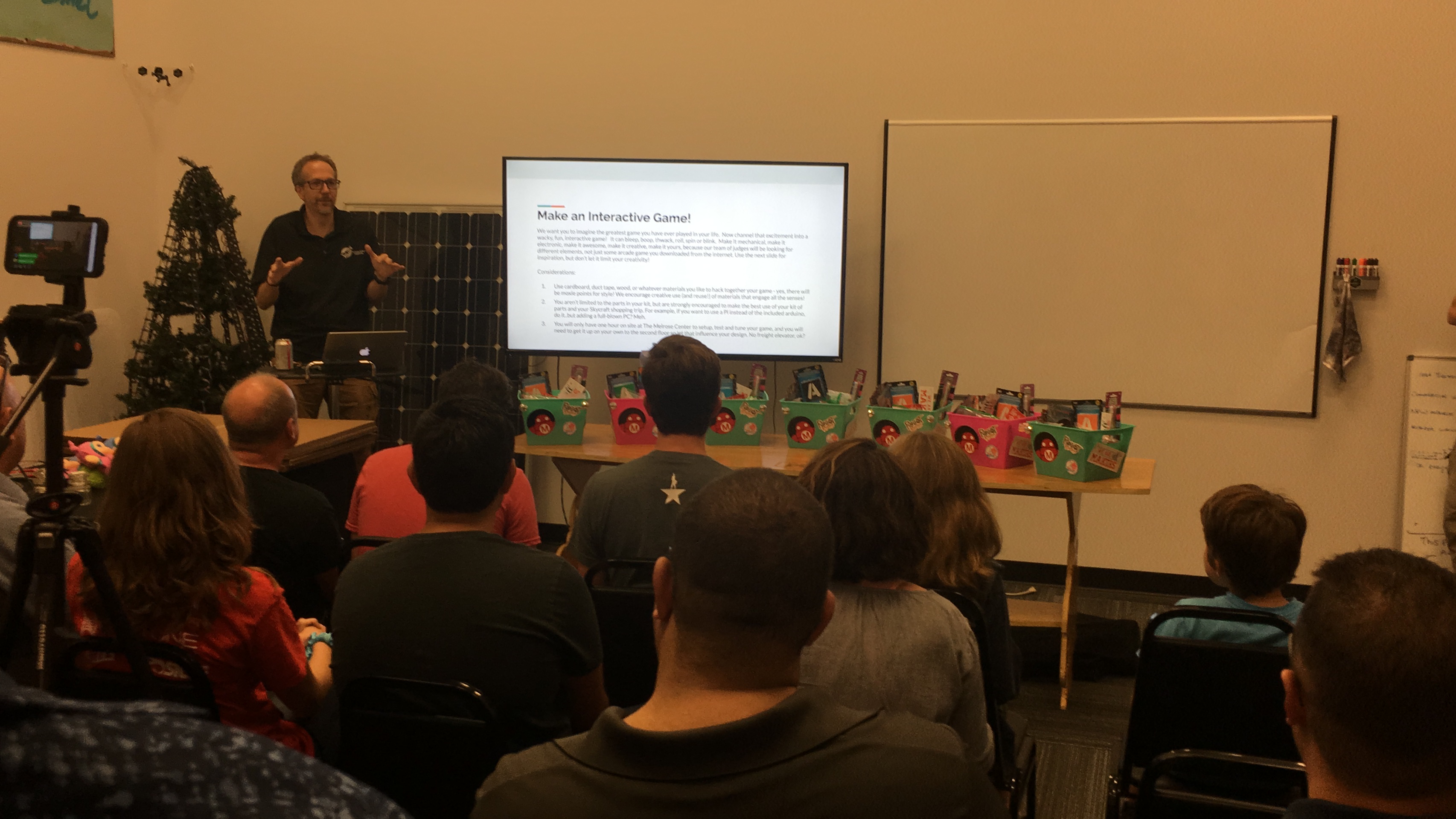 So the Makeathon has started. A few of my friends from work are teaming up for this fundraiser for The Maker Effect Foundation. You can follow us live on this blog, or on my
  Milluzzi Labs